
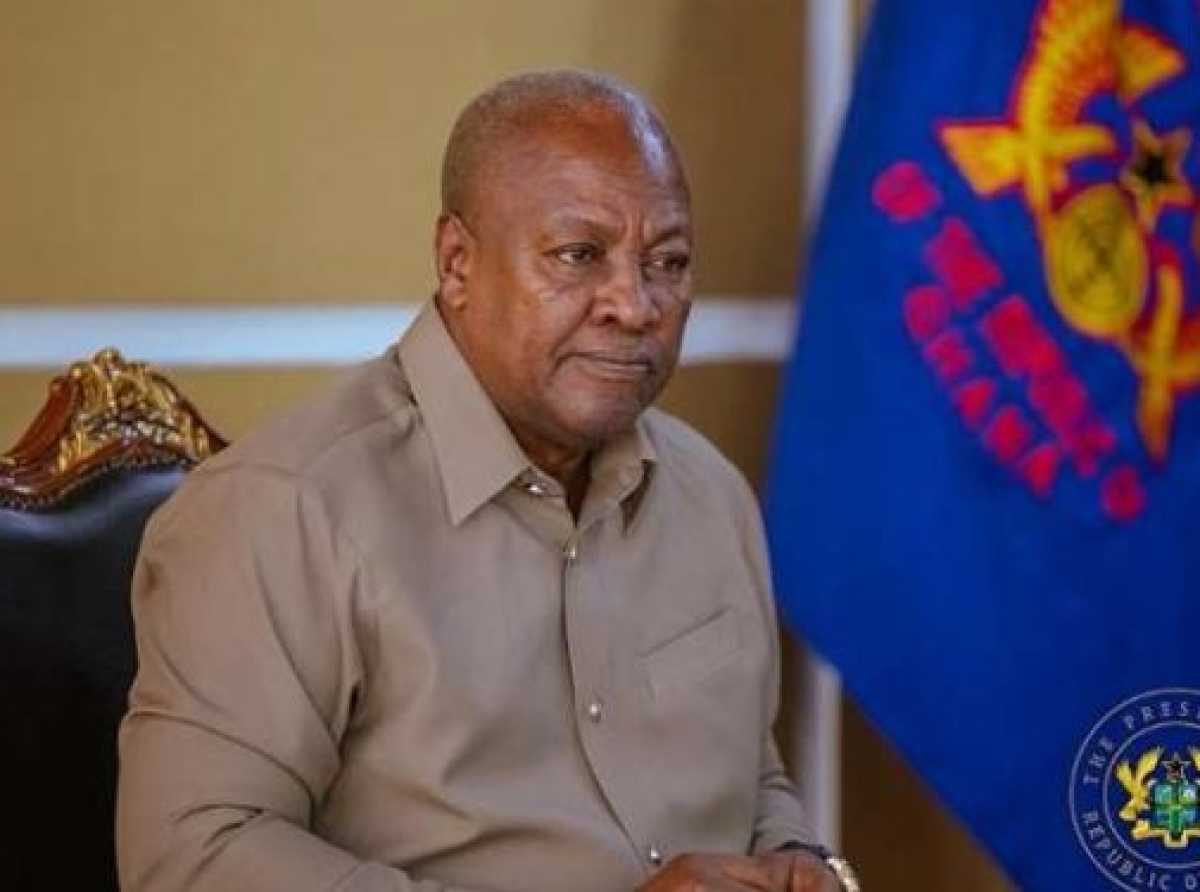
The Minority Caucus in Parliament has called on President John Dramani Mahama to withhold his assent to the recently passed Tribunals Bill, warning that the legislation could have significant constitutional and legal consequences for Ghana's justice system.
The caucus argues that the bill is fundamentally flawed and risks reviving a tribunal system that many Ghanaians associate with controversial periods in the country's political history.
Speaking on Channel One Newsroom, the Ranking Member on Parliament's Constitutional, Legal and Parliamentary Affairs Committee and Member of Parliament for Asante Akim Central, Kwame Anyimadu-Antwi, appealed directly to President Mahama to decline signing the legislation into law, saying such a decision would help preserve his legacy.
According to him, the Minority is preparing a comprehensive public statement detailing what it considers to be serious defects in the bill before formally petitioning the President.
"We would come out with a press release telling Ghanaians the wrong things in the bill. And then we would also ask President Mahama, whom we all think should leave a good legacy, not to sign this bill because it's no good for Ghana," he stated.
Mr. Anyimadu-Antwi contended that the proposed legislation effectively revives a tribunal system that many citizens remember from the Armed Forces Revolutionary Council (AFRC) and Provisional National Defence Council (PNDC) eras, periods that have often been criticised over alleged human rights abuses and concerns about due process.
He argued that the reintroduction of such tribunals is unnecessary and could undermine confidence in Ghana's judicial system.
According to the Minority lawmaker, the government's reasons for introducing the bill—including reducing the backlog of court cases and strengthening the prosecution of illegal mining offences—do not justify creating a separate tribunal structure.
The Asante Akim Central MP maintained that Ghana's Constitution already empowers the Chief Justice to establish specialised courts to deal with specific categories of cases whenever the need arises.
He argued that rather than creating tribunals, government should strengthen the existing court system by expanding specialised courts and providing them with adequate logistical and human resources.
According to him, this approach would address case backlogs without introducing what he described as a parallel judicial mechanism.
Mr. Anyimadu-Antwi also expressed reservations about provisions governing the composition of tribunal panels.
He claimed that educational qualification requirements for some tribunal members were weakened during Parliament's consideration of the bill, raising questions about the competence and independence of those who may eventually serve on such panels.
He further insisted that certain provisions of the legislation are inconsistent with the 1992 Constitution and therefore vulnerable to legal challenge.
The Minority has consequently warned that should President Mahama sign the bill into law despite their objections, they will explore legal options, including seeking judicial interpretation before the courts.
The Tribunals Bill was passed by Parliament after extensive debate, despite strong opposition from the Minority.
The Majority Caucus has defended the legislation, arguing that it modernises Ghana's tribunal framework and provides a stronger legal basis for handling specialised cases efficiently.
According to the Majority, concerns raised during parliamentary deliberations were addressed through amendments, and the final version of the bill provides adequate safeguards to ensure fairness, accountability and adherence to constitutional principles.
Supporters of the legislation also argue that specialised tribunals could help improve the speed of justice delivery, particularly in cases involving complex financial crimes, environmental offences such as illegal mining, and other specialised matters.
Attention now shifts to President John Dramani Mahama, whose assent is required before the Tribunals Bill becomes law.
Should the President approve the legislation, it is expected that the Minority will pursue legal action to challenge its constitutionality, potentially setting the stage for another significant constitutional case before Ghana's Supreme Court.
The outcome of the debate is likely to shape the future of specialised adjudication in Ghana and influence broader discussions on judicial reforms, constitutional governance and the administration of justice.

Aikines Anyomi

News
Food
Politics
Technology
About Us
Download Our Mobile App

