National Ambulance Service rejects claims that EMTs are poorly trained

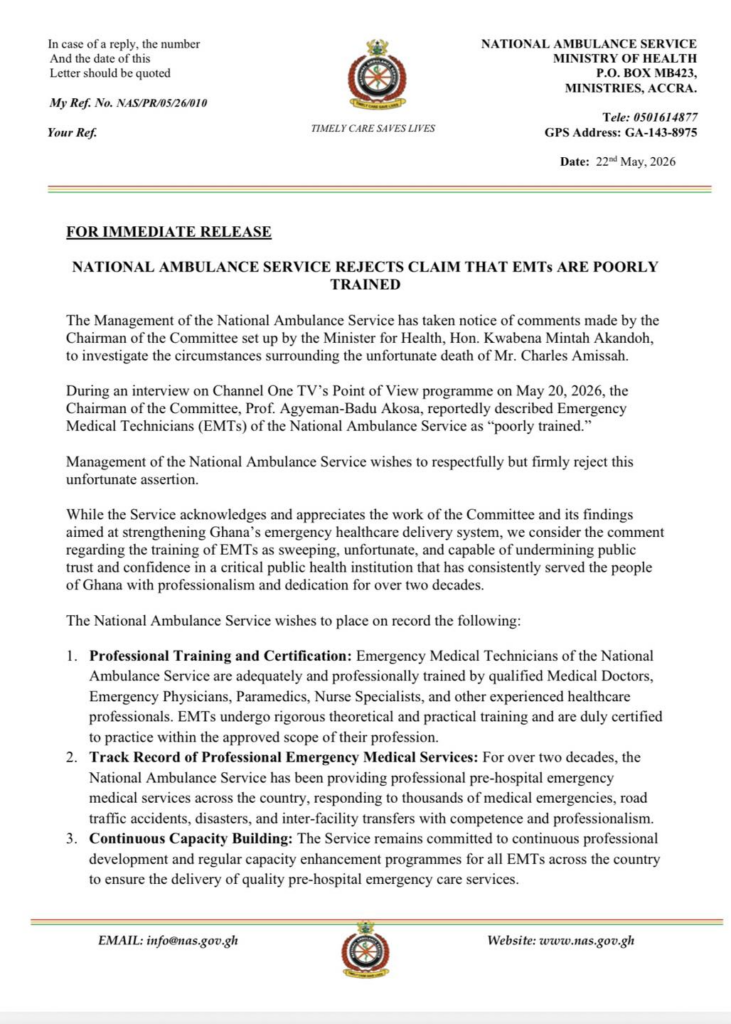
The Ghana National Ambulance Service has strongly dismissed claims that its Emergency Medical Technicians (EMTs) are inadequately trained, describing the assertion as sweeping, unfortunate, and capable of damaging public confidence in Ghana’s emergency healthcare system.
In a press statement issued on Friday, May 22, the Service responded to comments reportedly made by Professor Agyeman-Badu Akosa, Chairman of the committee established by Kwabena Mintah Akandoh to investigate the circumstances surrounding the death of Mr Charles Amissah.
During an appearance on Channel One TV’s Point of View programme on May 20, Prof Akosa allegedly described EMTs within the National Ambulance Service as “poorly trained,” comments that have since triggered public debate about the competence and preparedness of Ghana’s emergency response personnel.
However, management of the National Ambulance Service has firmly rejected the allegation, insisting that all EMTs undergo extensive theoretical and practical training supervised by qualified healthcare professionals, including doctors, emergency physicians, paramedics, and nurse specialists.
According to the Service, EMT personnel are professionally certified and authorised to operate strictly within the approved scope of their duties. Management further explained that ambulance personnel are continuously assessed and monitored to ensure they maintain required professional and operational standards.
The statement highlighted that the National Ambulance Service has spent more than two decades providing pre-hospital emergency care services across Ghana, responding to thousands of road accidents, medical emergencies, disasters, and inter-facility patient transfers nationwide.
Management argued that claims suggesting EMTs are poorly trained undermine the sacrifices, professionalism, and dedication of emergency responders who often work under extremely difficult and high-pressure conditions to save lives.
“The comment regarding the training of EMTs is sweeping, unfortunate, and capable of undermining public trust and confidence in a critical public health institution,” the statement emphasized.
Despite rejecting the comments, the Service acknowledged the work of the investigative committee and welcomed ongoing efforts aimed at strengthening Ghana’s emergency healthcare delivery system.
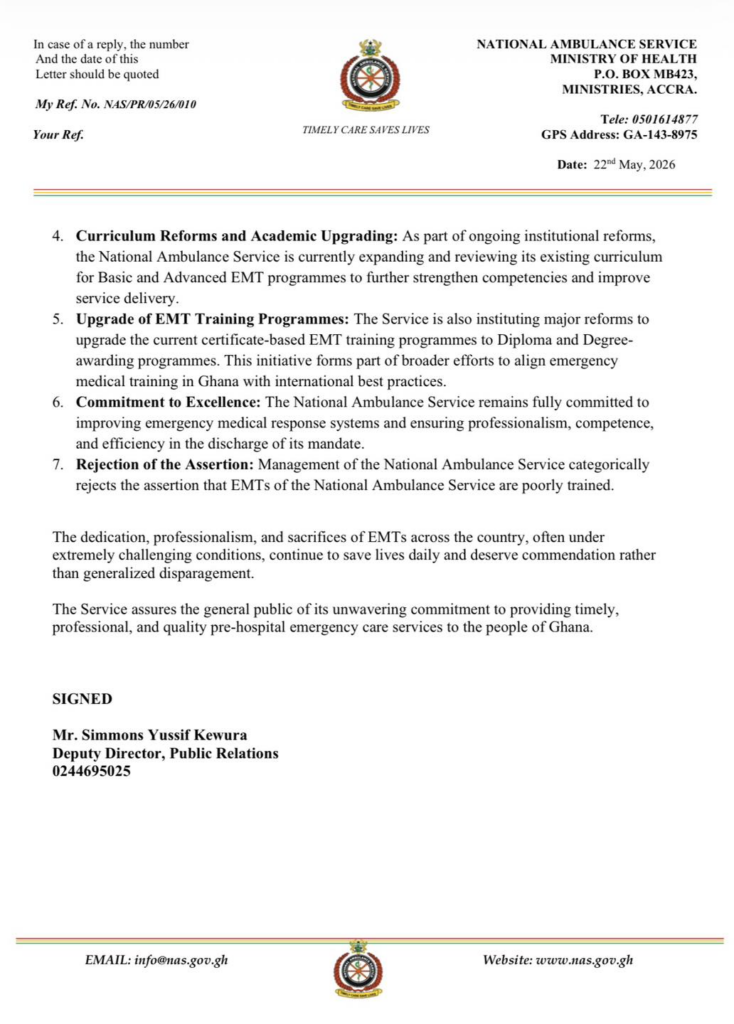
As part of measures to improve standards further, the National Ambulance Service disclosed that it is currently reviewing and expanding its curriculum for both Basic and Advanced EMT programmes. According to management, the reforms are intended to modernise training structures, strengthen technical competencies, and improve emergency healthcare delivery across the country.
The Service also announced plans to upgrade its existing certificate-based EMT training programmes into diploma and degree-awarding programmes. Management explained that the initiative forms part of broader reforms designed to align Ghana’s emergency medical training system with international best practices.
Additionally, the institution reaffirmed its commitment to continuous professional development through regular refresher courses, specialised training sessions, and capacity-building programmes for EMTs nationwide.
The statement further praised ambulance personnel for their commitment and sacrifices, noting that EMTs continue to save lives daily despite operational and logistical challenges confronting the emergency healthcare sector.
“The Service assures the general public of its unwavering commitment to providing timely, professional, and quality pre-hospital emergency care services to the people of Ghana,” management added.

Aikines Anyomi

News
Food
Politics
Technology
About Us
Download Our Mobile App

